



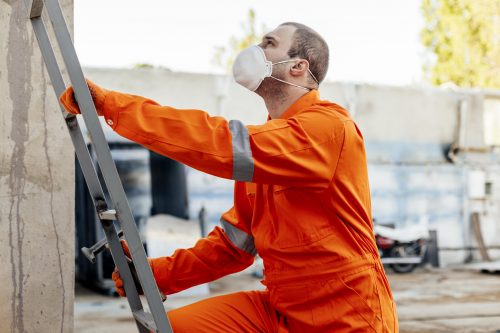
In a building constructed before the 2000s, a team of workers is dismantling an old roof to replace it. The corrugated sheets may appear harmless, but they contain asbestos — information that no one checked before the work began. Cutting and breaking the sheets releases microscopic, invisible fibres into the air, which the workers unknowingly inhale.
Thank you for reading this post, don't forget to subscribe!Asbestos remains one of the most dangerous materials a worker can encounter, precisely because the effects of exposure do not appear immediately. They may emerge decades later in the form of asbestosis, lung cancer or mesothelioma. Government Decision No. 1875/2005 on the protection of workers’ health and safety against the risks arising from exposure to asbestos regulates such situations — demolition, maintenance work and the removal of asbestos-containing materials — and imposes strict obligations from the planning stage onward.
The first practical obligation is identification. Before starting demolition or maintenance work in an older building, the employer must determine, using all available means, whether the materials concerned contain asbestos. Assuming that they “probably do not contain asbestos” is not a legally acceptable option. In the absence of certainty, the material must be treated as if it contains asbestos until proven otherwise.
For work where there is a genuine risk of exceeding the exposure limit values, Government Decision No. 1875/2005 requires a documented work plan describing the nature and probable duration of the work, the location where it will be carried out, the methods used for handling the materials, the characteristics of the respiratory protective and decontamination equipment, as well as the measures taken to protect people in the vicinity of the work area — including those who are not directly involved in the work.
If, despite the measures taken, the exposure limit values are nevertheless exceeded, the law does not allow the work to continue under the same conditions. The employer must identify the causes of the exceedance and remedy the situation as quickly as possible, while exposed workers must be provided with appropriate respiratory protective equipment as a mandatory condition for continuing the work.
The difference between a demolition project managed correctly and one managed incorrectly is not visible on the day the work is carried out, but twenty or thirty years later, when a former worker seeks medical attention with symptoms that cannot otherwise be explained. This is precisely why identifying asbestos before carrying out work on an older building is the measure that truly matters.