



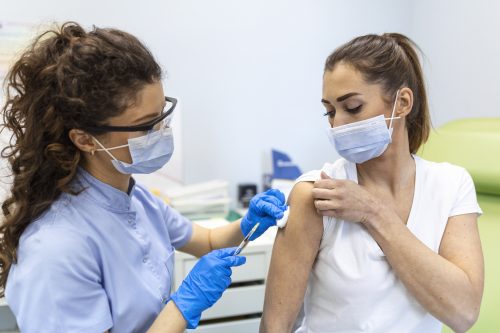
A nurse accidentally pricks herself with a needle that had previously been used to collect a blood sample from a patient. The incident reporting procedure is not followed immediately. Her colleagues are busy, the shift is hectic, and she postpones completing the required documentation until later. The prophylactic treatment that should have been administered within the first few hours is given too late. The result is an infection that changes her life, followed by court proceedings in which the hospital is ordered to pay substantial compensation.
Thank you for reading this post, don't forget to subscribe!Exposure to biological agents is not a risk limited exclusively to hospitals and medical practices, although it is perhaps most visible there. Workers in waste management, agriculture, social services, cleaning services, and the food service industry are exposed, by the very nature of their work, to bacteria, viruses, fungi, or parasites capable of causing illness—sometimes minor, sometimes severe.
Law No. 319/2006 and Government Decision No. 1092/2006 on the protection of workers from risks related to exposure to biological agents at work classify biological agents into four risk groups according to their likelihood of causing disease, the severity of the disease, the risk of spreading within the community, and the availability of effective treatment or prophylaxis. A Group 1 biological agent poses no risk to a healthy adult, whereas a Group 4 agent may cause severe disease, presents a high risk of community spread, and has no effective treatment available.
For employers, this classification is not merely a theoretical exercise; it is the starting point for the risk assessment. Government Decision No. 1092/2006 requires employers to identify potential sources of exposure—such as contact with blood or other bodily fluids, handling contaminated waste, or contact with animals or infected individuals—and to establish appropriate protective measures: personal protective equipment suited to the actual risk, clear hygiene procedures, proper management of potentially infectious waste, and, where justified by the level of risk, vaccination of exposed workers.
Training also plays a role that no written procedure can replace. It is not enough for a worker to know that gloves must be worn; they must understand why accidental exposure—whether through a needlestick injury, contact with mucous membranes, or a scratch—requires immediate reporting rather than waiting until there is more time. The difference between an exposure that is managed correctly and one that is ignored is often measured in hours rather than days. Prompt medical evaluation and timely prophylactic treatment can prevent a minor incident from developing into a disease with permanent consequences.
The case of the nurse described above illustrates exactly how biological risk becomes dangerous: not because protective equipment is lacking, but because the response procedure is delayed or ignored. A contaminated needle remains a manageable risk as long as reporting and medical assessment take place immediately. It becomes a preventable tragedy only when, for one reason or another, that critical period of time is lost.