



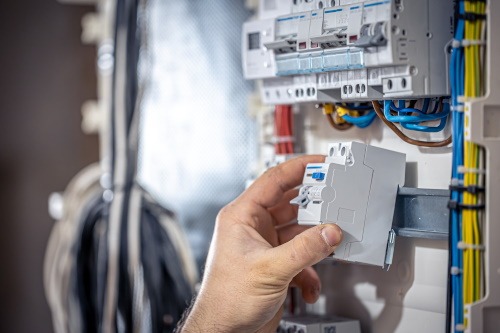
An unverified electrical installation can, over time, become a major source of risk. It can cause fires, electrical shocks, equipment failures, or business interruptions. Therefore, inspecting electrical installations should not be treated as a mere formality, but as a real preventive measure.
In Romania, the I7-2011 Standard establishes the requirements for the design, execution, operation, and inspection of electrical installations in buildings.
Initial Inspection
Any new, extended, or modified electrical installation must be inspected before being put into service.
This inspection aims to confirm that the installation was executed correctly and can be used safely. It checks, among other things, whether the installation complies with the project design, if the equipment is correctly chosen and installed, if the circuits are marked, if there is protection against electrical shock, and if the grounding system is adequate.
Periodic Inspection
After commissioning, the electrical installation must be inspected periodically, as wear and tear, loose connections, damaged insulation, faulty protections, or overloaded circuits can occur over time.
Periodic inspections serve to confirm that the installation remains safe and that protections will operate correctly in the event of a fault.
What is checked periodically?
Depending on the type of inspection, the main checks target:
- The earthing arrangement and earth resistance.
- The operation of fuses, circuit breakers, and residual current devices (RCDs).
- Insulation resistance.
- Continuity of the protective conductor.
- The condition of cables, sockets, panels, and enclosures.
- Equipotential bonding.
- The condition of artificial earth electrodes, where applicable.
Some checks are performed annually, others every 2 or 5 years, depending on the standard requirements and the type of installation.
Who can perform the inspections?
Inspections must be carried out by qualified and competent persons, using appropriate and metrologically calibrated measuring instruments. An informal visual check is not sufficient, especially when dealing with workspaces, commercial buildings, or areas with permanently used electrical equipment.
The Inspection Report
At the end, an inspection report is drafted, recording the inspected installations, measured values, potential deficiencies, and recommended measures.
If a defect posing immediate danger is found, the affected circuit or equipment must be de-energized until repaired.