



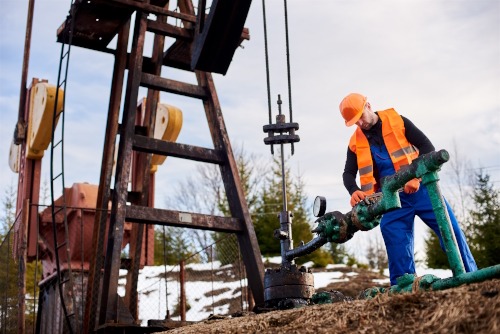
At first glance, water well drilling appears to be a purely technical activity: machinery, casing columns, pumps, bentonite, cementing operations, and hydrostatic measurements. In reality, from an occupational health and safety (OHS) perspective, it is an activity with a high level of risk, carried out in a dynamic environment where a single mistake can have serious consequences.
Thank you for reading this post, don't forget to subscribe!A drilling site involves heavy machinery in motion, sometimes unstable terrain, deep excavation work, the handling of bulky materials, and the use of substances with irritating or corrosive potential. During the positioning and stabilization of the drilling rig, incorrect placement may lead to loss of equipment stability. During the drilling process itself, rotating components and drilling strings can become major sources of injury through impact or entanglement. The wellhead constantly represents a fall hazard, particularly in the absence of proper fencing and warning signage.
The risks do not stop there. When handling casing pipes or heavy materials, intense physical effort and forced postures may lead to musculoskeletal disorders. The use of electrical equipment in wet environments increases the risk of electrocution, while outdoor work exposes workers to variable weather conditions that can directly affect safety.
Special stages such as sand removal, well cleaning, or sterilization with calcium hypochlorite add another layer of risk. Particle projections, contact with chemicals, and inhalation of vapors may cause injuries or intoxication if adequate protective measures are not implemented. Even seemingly simple operations, such as installing the protective cap or pouring the concrete slab, can become dangerous in the absence of rigorous site organization.
For this reason, the OHS approach in well drilling cannot be formal or superficial. It begins with a proper risk assessment, performed step by step, and continues with the establishment of real preventive measures adapted to the specific site conditions. Collective protection must take priority: stabilizing the drilling installation, fencing the work area, clearly marking hazardous zones, and organizing the movement of machinery reduce risks before relying on personal protective equipment.
Personal protective equipment—helmet, steel-toe safety boots, resistant gloves, safety goggles, and respiratory protection—complements the prevention system but cannot compensate for poor site organization. At the same time, regular and task-specific worker training is essential. A worker who understands the risks and knows how to respond to unforeseen situations becomes an active part of the prevention system.
Water well drilling is a necessary and useful activity, but it requires responsibility. Beyond productivity and project deadlines, safety must remain the main priority. In this field, prevention is not only a legal obligation—it is the difference between a controlled construction site and an incident that can affect workers, the company, and the future of the project.